
-
Coal-Heaving and Logistical Labour

Susan Zieger, University of California, Riverside In the age of steam, half of all workers handled coal. Historian On Barak’s statistic kindles our imagination of a bygone mode of embodiment. Faces ingrained with dust so deep that barbers would refuse to ruin their razors shaving coal handlers. Special “fantail” hats to prevent soot from sliding…
-
Carlyle’s Melodramatic Moment: Feeling History in the French Revolution

Matthew Skwiat, Morehouse College Any adventurous reader encountering Thomas Carlyle’s The French Revolution (1837) for the first time is in for a treat. By turns fascinating, difficult, frustrating, beautiful, and ultimately moving, Carlyle builds his historical epic with the fine details of a novelist, the lyricism of a poet, and the vision of a dramatist. While a number…
-
The Illicit Diamond Buyer as a Transcolonial Literary Figure

By Sarah Comyn (University College Dublin) What literary cultures does nineteenth-century mineral mining in the British southern settlercolonies produce? Do new genres and forms emerge in response to the extractivism of thesecolonies? Can we distinguish a diamond text from a gold text? These are some of the questions that the Research Ireland-funded ‘Imperial Minerals’ project…
-
“Social Contrapower, Female Autonomy, and Sexual Justice in Thomas Hardy’s ‘The Son’s Veto’”

by Riya Das “The Son’s Veto” (1891), reportedly Thomas Hardy’s personal favorite among his short stories (Ray 542), is a nineteenth-century narrative that was of immense pedagogical significance to me before it also became a subject of my research and writing. Hardy’s short story was the first piece of Victorian literature I ever taught –…
-
“Everything is Made out of Magic:” Fairies, Gardens, and the Victorian Fairy Child

By Ronja C. Frank As an inherently liminal being, the fairy of the Victorian imagination occupies a space where science fantasy, nature and culture, human and nonhuman collide. By uniting such dichotomies within itself, the fairy puts to question a range of binaries at the heart of Victorian society as it unsettles strict divisions between…
-
“Breathing the ‘air of reality’ in Henry James’s In the Cage”

Daniel Hannah This article began as a paper delivered at the International Henry James Society conference in Kyoto, Japan in July of 2023. It was the first international conference that I and many of my colleagues had attended since the onset of the Covid pandemic (indeed, the gathering had already been delayed one year due…
-
Nothing but a Humbug: P. T. Barnum, Charles Dickens, and the Construction of National Identities in a Living Archive

By Abby Clayton Years ago, I was an eager undergraduate student living abroad for the first time and interning at the Shakespeare Birthplace Trust (SBT) in Stratford-upon-Avon, UK. Tasked with the assisting in the organization’s digital marketing and development, I began with some due diligence reconnaissance, looking at old blog posts, social media accounts, and…
-
Wandering through “Pagan” Wiltshire with Richard Jefferies

By Dr. Jeff Swim My article in the latest issue of the Victorian Review (49.2) looks at the convergence of archaeology, ecology, and pagan revivalism in the works of Richard Jefferies. Jefferies’ youth was spent walking the hills and fields of Wiltshire, especially in the regions around “the old house at Coate,” the Jefferies’ family…
-
Oliver as Object: Character, Genre, and Agency in the Victorian Novel

Meegan Kennedy, Florida State University When I teach Charles Dickens’s novel Oliver Twist, I notice that students are often frustrated by Oliver’s passivity in the face of so many wrongs. Oliver moves through many different settings in the novel—baby farm, workhouse, apprenticeships with a chimney sweep, undertaker, and crime syndicate, safe havens in the city…
-
“I candidly confess I am growing afraid of Tiny”: Goldfish in the Late-Victorian Imagination
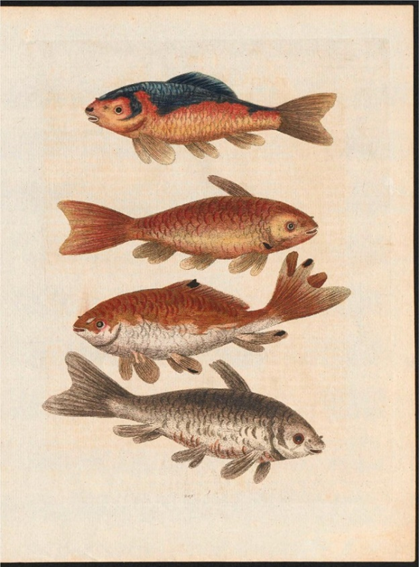
By Anika Zuhlke In 1878, the Liverpool Mercury published a piece titled “Our Mysterious Goldfish.” In it, the writer, W.F.P., relates that they purchased three small goldfish for their outdoor pond. The fish were left outside during a series of frosts, and one perished. They were then transferred to an indoor globe, but the smallest,…
Blog
B


